Agnus Dei
Image: »Francisco de Zurbarán – Agnus Dei«
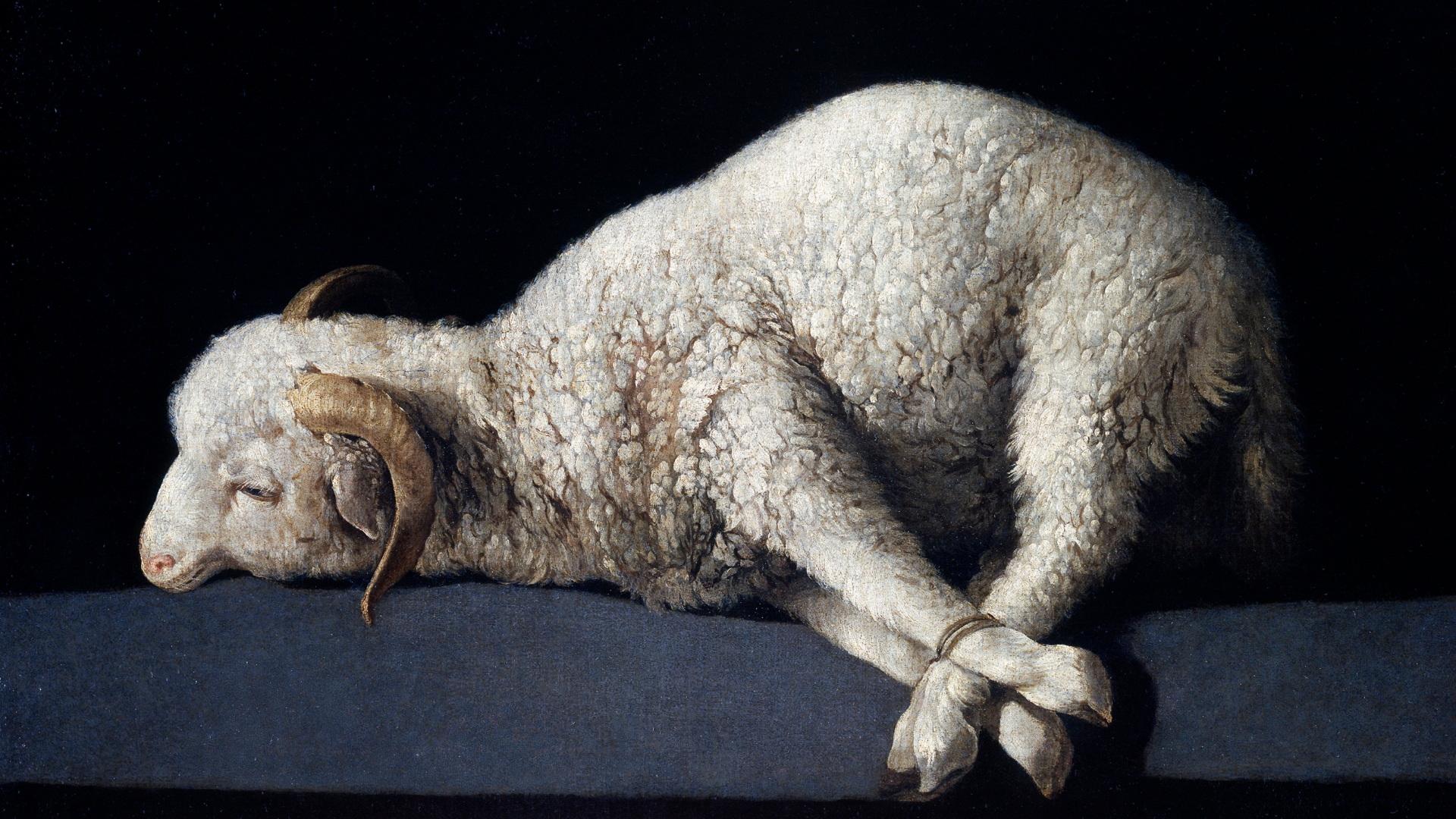
The Agnus Dei is a liturgical prayer addressed to Jesus Christ under the title “Lamb of God.” It consists of a threefold invocation asking for mercy and peace and is closely associated with the Eucharistic rite in the Roman Catholic tradition.
Text of the Prayer (Latin and English)
The complete Latin text and standard English translation of the Agnus Dei may be read at latinprayer.org/prayers/agnus-dei/.
That page provides the prayer in Latin with parallel English, Spanish, and German versions.
Origin and Historical Background
The expression “Lamb of God” originates from John 1:29, where John the Baptist identifies Jesus as the one who “takes away the sin of the world.” This imagery draws on Old Testament sacrificial traditions, particularly the Passover lamb and the suffering servant imagery of Isaiah.
The Agnus Dei was introduced into the Roman Mass in the seventh century, traditionally attributed to Pope Sergius I (†701). From that point onward, it became a stable and universal element of the Mass in the Roman Rite.
Theological and Scriptural Themes
The prayer expresses several central theological themes:
- Redemptive sacrifice: Christ is identified with the sacrificial lamb whose death brings forgiveness of sins.
- Mercy: The repeated petition “have mercy on us” emphasizes human dependence on divine grace.
- Peace and reconciliation: The final invocation links forgiveness of sins with the gift of peace.
These themes situate the Agnus Dei at the intersection of Christology, soteriology, and Eucharistic theology.
Liturgical and Devotional Use
In the Roman Catholic Mass, the Agnus Dei is sung or recited during the Fraction Rite, as the consecrated Host is broken. Its function is both practical—accompanying the ritual action—and theological, directing attention to Christ’s sacrificial presence in the Eucharist.
Beyond the Mass, the text has inspired numerous musical settings and artistic representations throughout Christian history.
Role in Catholic Life and Practice
The Agnus Dei remains one of the most frequently heard prayers in Catholic worship, shaping how believers understand Christ’s sacrifice and its ongoing significance. Its enduring use reflects a concise and scripturally grounded expression of repentance, hope for mercy, and the desire for peace rooted in Christ.