Nunc Dimittis
Image: »Gerbrand van den Eeckhout: Simeon in the Temple«
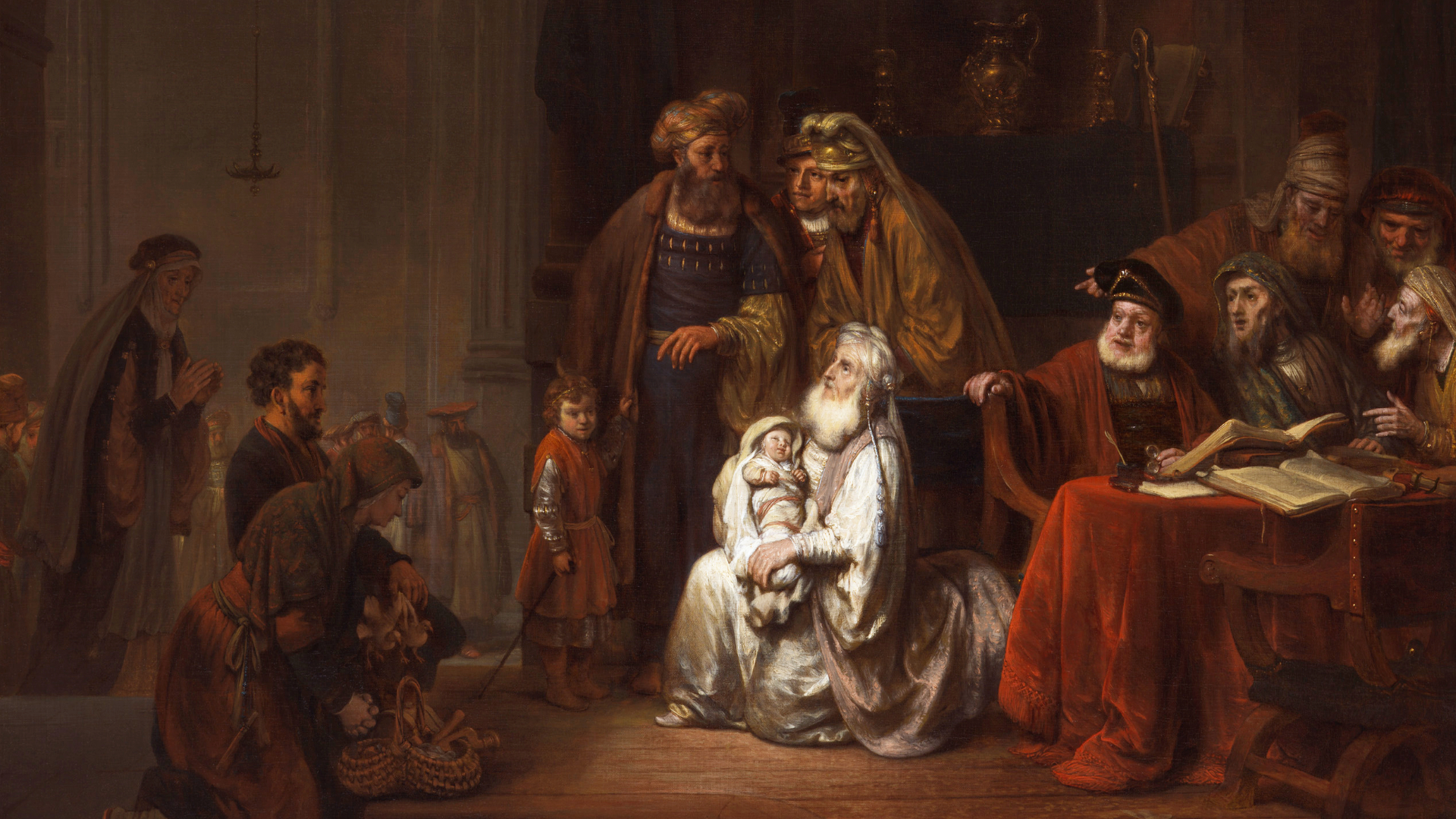
The Nunc Dimittis (Latin: “Now you dismiss”) is a canticle drawn directly from Scripture and traditionally attributed to Simeon, a righteous elder in Jerusalem. It articulates a sense of completion and trust in God after witnessing the promised Messiah.
Text of the Prayer (Latin and English)
The full Latin text and standard English translation of the Nunc Dimittis may be read at latinprayer.org/prayers/nunc-dimittis/.
That page provides the prayer in Latin with parallel English, Spanish, and German translations.
Origin and Historical Background
The Nunc Dimittis originates from Luke 2:29-32, within the narrative of the Presentation of Jesus in the Temple. According to the Gospel account, Simeon had been promised that he would not see death before encountering the Messiah. Upon seeing the child Jesus, he pronounces this canticle, acknowledging the fulfillment of divine promise.
From an early period, the Church recognized this passage as a hymn-like text suitable for liturgical use. By late antiquity, it was incorporated into Christian prayer, particularly in evening or night contexts, reflecting its themes of completion and peaceful departure.
Theological and Scriptural Themes
The canticle centers on several key theological motifs:
- Fulfillment of promise: Simeon’s words affirm God’s fidelity to covenantal hope.
- Universal salvation: The reference to “a light for revelation to the Gentiles” underscores the extension of salvation beyond Israel.
- Peaceful death: The opening line presents death not as fearsome but as a tranquil release in God’s will.
These themes align the Nunc Dimittis closely with Christian eschatological hope and trust in divine providence.
Liturgical and Devotional Use
In the Roman Catholic liturgy, the Nunc Dimittis is traditionally sung or recited during Night Prayer (Compline) in the Liturgy of the Hours. Its placement at the close of the day reinforces its symbolic association with rest, completion, and entrusting oneself to God.
It has also been widely used in musical settings throughout Christian history, particularly in choral traditions associated with evening prayer.
Role in Catholic Life and Practice
The Nunc Dimittis continues to shape Catholic spiritual imagination by providing language for gratitude, hope, and serene confidence at life’s close. Its enduring use reflects a prayerful posture that views both daily rest and final death as moments to rest securely in the fulfillment of God’s promises.