Oratio Rosarii
Image: »The Roses«
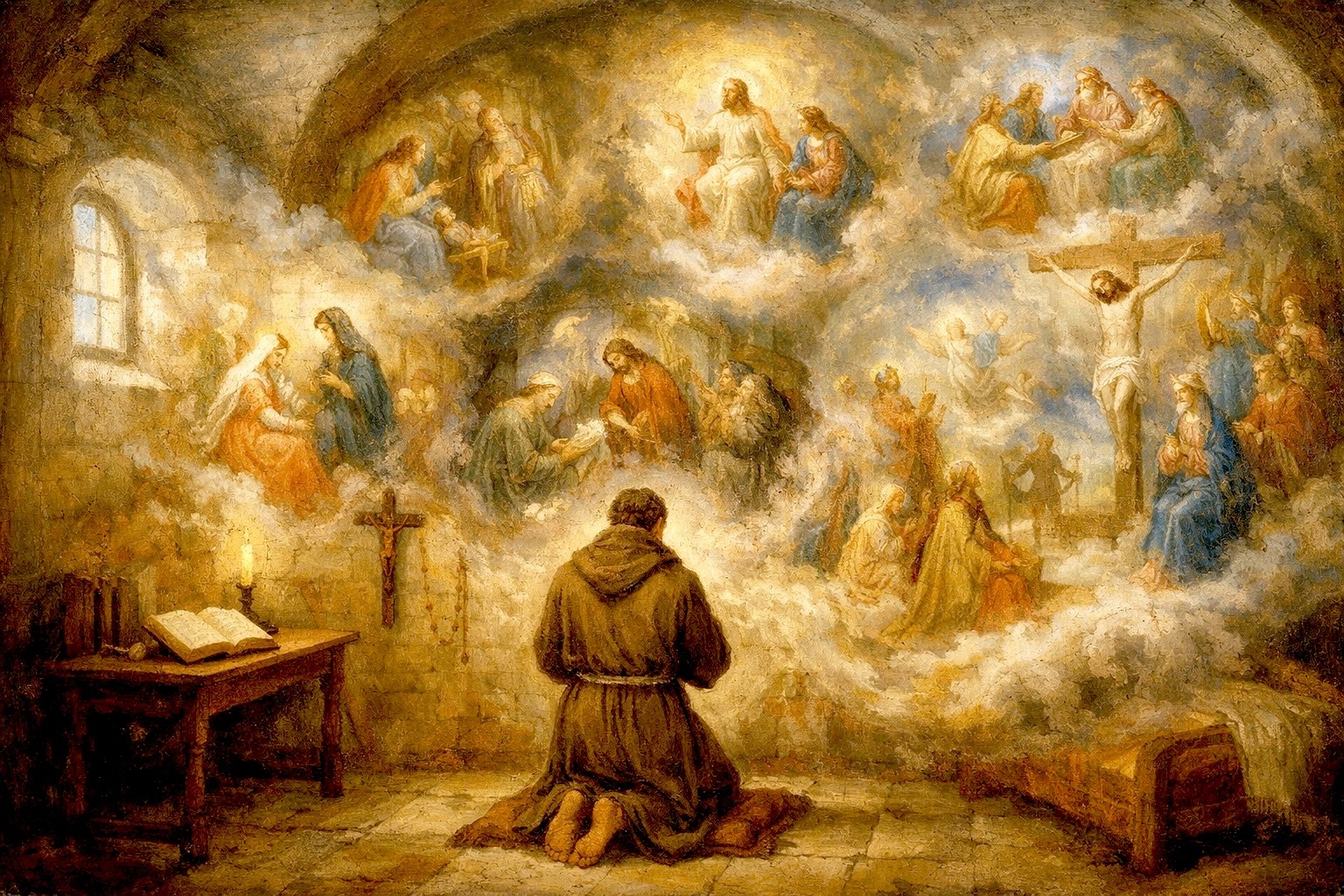
The Oratio Rosarii developed alongside the stabilization of the Rosary’s structure in the late Middle Ages. By the early modern period, it had become customary as the principal collect-like conclusion following the decades of the Rosary.
The standard Latin text and aligned translations may also be consulted at:
Oratio Rosarii
Its style reflects the syntax and theology of Latin liturgical prayers, particularly the collects of the Roman Rite, suggesting composition or refinement within clerical devotional contexts rather than spontaneous popular prayer.
Theological and Scriptural Themes
The prayer is explicitly Christocentric, grounding salvation in the life, death, and resurrection of Christ (cf. Romans 6:4–5). Marian reference is secondary and instrumental: the Rosary is described as belonging to the Blessed Virgin Mary, but its mysteries remain those of Christ.
A key theological theme is the unity of contemplation and action. The petition “to imitate what they contain” emphasizes moral transformation, while “to obtain what they promise” points to eschatological fulfillment, uniting present discipleship with future hope.
Liturgical and Devotional Use
Although not part of the official liturgy, the Oratio Rosarii functions analogously to a concluding collect in devotional prayer. It is typically recited after the Salve Regina and final invocations at the end of the Rosary, whether prayed privately or communally.
The prayer appears consistently in Rosary manuals and prayer books from the post-Tridentine period onward.
Role in Catholic Life and Practice
Within Catholic devotional life, the Oratio Rosarii serves as a theological summary of the Rosary itself, articulating its purpose in concise form. By explicitly linking meditation to imitation and promise to fulfillment, it underscores why the Rosary has endured as a formative practice for Christian prayer, reflection, and moral orientation across centuries.