

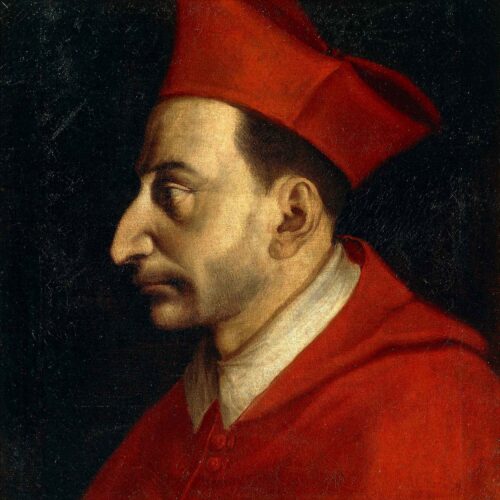
Charles Borromeo
Saint Charles Borromeo is patron of seminarians and catechists because he, more than anyone, built the institutions of priestly formation that the Council of Trent decreed: as Archbishop of Milan he founded seminaries, wrote rules for them, and organized the systematic teaching of Christian doctrine to the young — the origin of the modern catechism class. Bishops claim him as the very model of the reforming Counter-Reformation prelate. He is invoked against stomach ailments and intestinal disorders by tradition; his iconography is also entwined with his heroic service during the Milan plague of 1576, when he tended the dying in person and walked barefoot in procession to beg God’s mercy.
Saint Charles Borromeo was the Archbishop of Milan and a key figure in the Counter-Reformation. Born into Italian nobility in 1538, he was instrumental in the final sessions of the Council of Trent. He reformed clerical education, established seminaries, and personally cared for plague victims during the epidemic of 1576.